

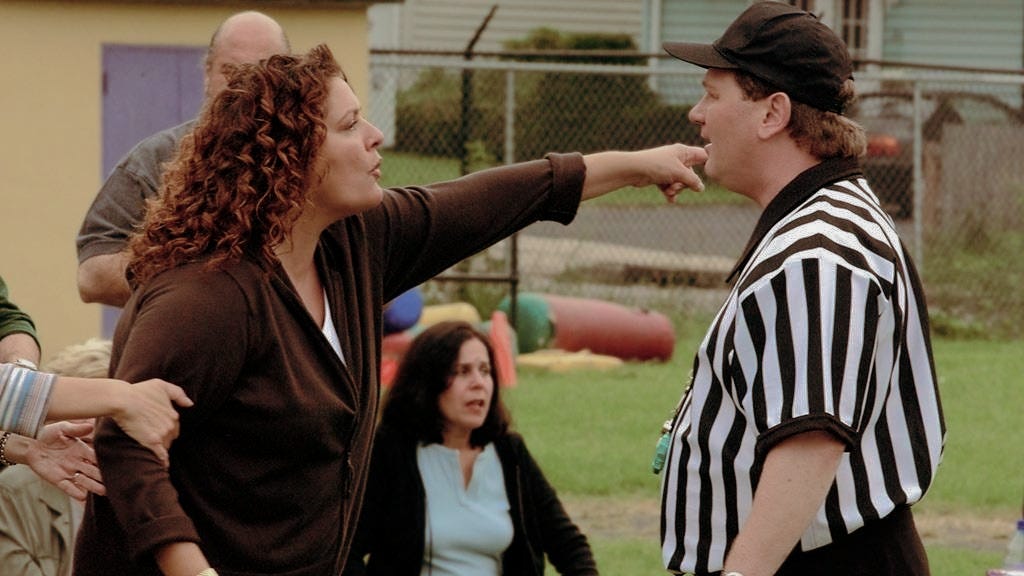
When parents lose their minds in youth sports, we often ascribe it to the parent living vicariously through their kid, trying to gain status through their child’s performance or to relive their glory days. While that’s certainly a driver, it is not the only one. What if another big reason youth sports has become such a circus for adults is because so many adults are numbed out in their daily lives, and their kid’s baseball game is one of the last places they feel fully invested and alive?
What follows is an extreme illustration, but I think it contains more than a kernel of truth.
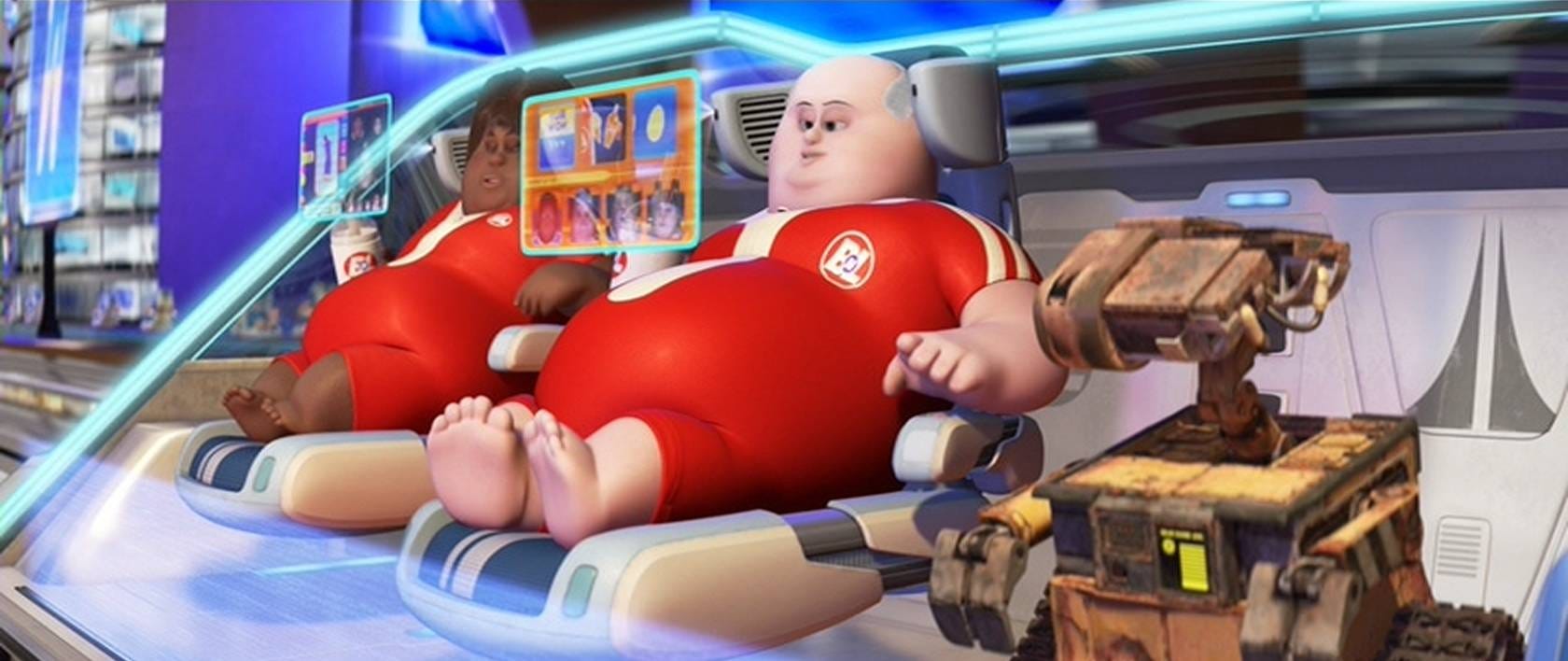
Many of us are stuck in jobs we don’t love while being told that the only place we can achieve or obtain status is through our careers. We work hard, chasing the external items—a bigger house, a fancier car, a nicer suit—that are supposed to fulfill us, but always leave us wanting. To recover from a long day at work full of meetings, distractions, and manufactured stress, we head home and veg out on screens. We absorb momentary hits of dopamine as we scroll, hoping it will quell our anxiety or existential distress. At worst, we move from one shallow and distracted form of leisure to the next, as if we are floating through our lives like characters in the movie WALL-E.
The Western world’s health crisis shows we’re moving our bodies less than ever before. We’ve engineered effortful physical activity out of our lives. At the same time, the epidemic of loneliness shows we are disconnected from others. We’ve streamlined the connection to a point where it’s no longer genuine. We have a pseudo-connection instead of the real thing. In short, we live in a world that is increasingly numbed out, void of opportunities for presence, connection, and aliveness.
So, for that brief moment in the stands at the baseball diamond or rec center, watching our nine-year-old play sports makes us feel something. We let go of our device, give our full attention to what is unfolding in front of us, experience actual adrenaline, and remember what it’s like to feel alive. This doesn’t just apply to youth sports. Former professional athletes experience something similar when they retire. They’ve spent a lifetime under the spotlight, in a career full of objective results, intense feelings, and emotions. And then it ends. The high is gone. Despite making tens of millions of dollars, many ex-professional athletes suffer from anxiety, depression, substance use disorders, or gambling addictions. These are all predictable responses to a shift from peak-aliveness to a less invigorating existence.
You also see this with how many former professional athletes get into coaching or commentating. It’s not often about status—many of these former players coach in the high school ranks or announce at division three games. And former pros rarely need the money, but as I experience from my journey of being a D-1 athlete to coaching, the closest you get to that feeling of lacing up the spikes yourself is to coach someone else to do it. Coaching makes you feel alive.
In a world that numbs us out and pushes us towards distraction and avoidance, sports are a place to still feel something. We’re forced to be in the present, to reckon with the stakes of having a concrete outcome in an activity we care about, to experience pain, fatigue, and discomfort, and be rewarded with the satisfaction of overcoming them. We used to have these experiences more frequently in our daily lives. We didn’t have phones and devices to distract us. We were active participants. Now, we’re passive participants. Many watch sports instead of playing them, and most of us only half-watch, as we are scrolling on another screen while the game is being played. We observe others baking, gardening, or reading on TikTok instead of doing these things ourselves. Too often, our jobs lack tangible end products through which we can evidently see our contributions.
In an analysis of how young adults spend their time compared to 2010, researchers found that time spent in nearly every activity we rate as being meaningful has declined. Meanwhile, we’ve seen an increase in time spent doing activities that are low in meaningfulness, such as video games and social media. Additionally, activities we do alone have increased, while those we do with others have declined.
One of the downsides of our digitally dominated world is that it is harder for us to feel significant and truly connected. As the media researcher Sherry Turkle puts it, we are “alone together.”
The antidote is to do real things, in the real world, and with real people.
The renowned mythologist Joseph Campbell once said, “People say that what we’re all seeking is meaning for life. I don’t think that’s what we’re really seeking. I think that what we’re seeking is an experience of being alive, so that our life experiences on the purely physical plane will have resonances with our own innermost being and reality, so that we actually feel the rapture of being alive.”
But we’ve engineered a world where it’s hard to take Campbell’s advice. The same reason parents lose their minds on the sidelines in youth sports is the reason so many people seem to enjoy screaming at others on social media. For a brief moment, ‘owning’ or trolling someone on the internet makes you feel something deeply, even if it brings about negative emotions; the ability to elicit emotion is a powerful tool to harbor.
It also explains why everyone on social media is jumping into cold plunges. It’s not really to help boost metabolism, activate brown fat, or whatever other pseudo-scientific explanation is given. It’s because it makes people who are chronically addicted to the internet or living a life highlighted by despondency, feel something again! And there is merit to that. But ideally, we develop sources of aliveness that are richer, more textured, and more meaningful than sitting in cold water. Here are five principles to help:
1. More active doing, less passive consuming. (Preferably with friends.)
We need more playing sports instead of consuming them. We need more hobbies and crafts instead of watching others do them on YouTube. And when you do watch events like sports, documentaries, or dramas, try to leave the second screen behind so you can be more present for what is in front of you.
2. Train for something. Embrace discomfort.
There’s nothing like training physically to remind you that you’re alive. You either lift the weight or you don’t. You experience fatigue and must navigate it. You’re inundated with a cacophony of inner sensations and feelings that rarely greet you in the modern world.
Often, we seek out the path of least resistance. That’s a one way ticket to the numbness we described. When we tell our brain to prioritize avoidance as a strategy over and over, eventually it gets the picture.
Choosing hard things is what trains our inner alarm to handle the load. This could be by taking up a sport, or a challenging craft, or just doing the small things that you’ve been avoiding, like that difficult conversation. Anything that sends the signal that you can handle and engage with discomfort.
3. Create something real. Be a craftsperson.
Build something. Take up woodworking, gardening, or stained glass. We used to have hobbies that resulted in the creation of something concrete, where you can see the end result and understand the progress that was made along the way. Building and creating grounds us in the real world. It’s why training for a marathon or deadlift isn’t too dissimilar from building a table or tending a garden.
4. Learn to listen to your inner state
A part of the numbness comes from ignoring or turning off our interoception, or the ability to read our inner signals. It’s the runner who never learned how to listen to their body because they always run with music or a podcast and over rely on their GPS watch.
We are masters at suppressing our inner world. Just look at what we’ve done with boredom. Instead of sitting with that experience, we grab for our phone at the first hint of the feeling.
Sit with your feelings. Whether it’s on a run, walk, or just sitting waiting for your food to arrive.
It’s the foundation for understanding what truly makes you feel engaged versus what provides a fleeting distraction.
5. Prioritize your basic psychological needs.
We need to find ways to attain significance, direction, and connection in the real world. Sometimes work does the job, but not always. In a world that has moved from local to global, it’s easy to get stuck in the comparison game, which will make you feel worthless and like you’re falling short, regardless of how great your life is. The antidote is to go in the other direction—to be aware globally, but to ensure you are also engaging locally. It’s better to be known in your community than it is to be a celebrity on the internet.
Try to make a difference. Not in the I’m going to change the world kind of way, but in how it’s been for nearly all of humankind. I’m going to make a difference for my family or local community. Giving back, helping others, realizing that the world doesn’t revolve around us is often the antidote to the numbness that stalks us.
– Steve Magness
I’ve always believed that we evolved as a successful species in part due to our physical endurance. In order to survive humans had to be in motion. I’d be curious as to what “zones” our ancient predecessors spent their days in. Therefore, it has never seemed logical let alone fulfilling to become sedentary because of modern day devices. I’m 83 and I can remember growing up in the 50’s hearing that inventions of the future do our work for us. I have competed In one sport or another since I joined the YMCA swim team at 11 years old. I’ve had to make adjustments as I’ve aged. I probably won’t race motocross any more, for example. However, a 2.5 hour bike ride at a 12 mph average keeps me moving and lifts my spirit. Building and maintaining our bikes and working as a mechanic in a local bike shop a day or two a week keeps my mind engaged and is part of my social network. During the Winter, we ski both Alpine and XC and my little shop in the basement turns into a wax room where I do my best to turn out fast skis. The bottom line is, I don’t wake up having to decide whether or not to workout or participate in some physical or mental activity. I wake up figuring out what I will do. My goal is to log 10 hours a week and a 100 miles on the bike. I am very grateful for this lifestyle despite some health issues. I try to do what I can to help people around me become aware of the benefits of a life in motion.
There's something in this that connects directly to why sport matters beyond performance. The research on flow state keeps pointing to full presence, real stakes, genuine effort. That experience is increasingly rare in daily life.
What's interesting is that athletes often chase the outcome without realizing the process is what they're actually craving.