

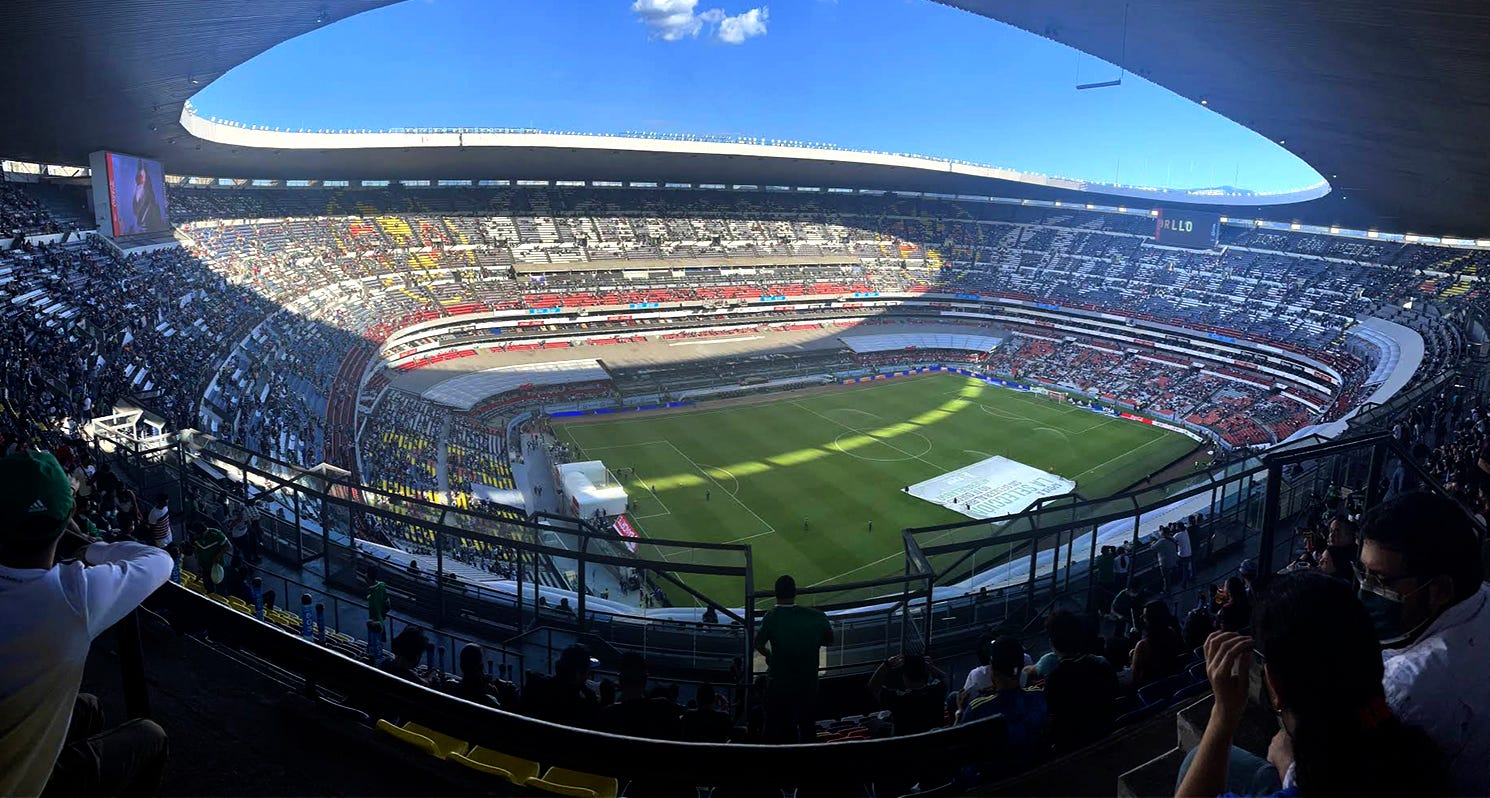
England is going to have to face Mexico on their home field, with screaming fans, and performing at over 7,000 feet altitude… That is no easy task. It might be the greatest home field advantage in sport. What do you do? Finally, a world cup soccer question squarely in my area of expertise.
First, the impact at 7k feet is real and significant. You can see it in the soccer data, total distance covered and high speed running drop significantly. 3-9% for the former, 10-15% for later. The higher the altitude, the bigger the effect. The less acclimated, the bigger the effect.
At 7k feet VO2max would drop about 10-13%. We saw this in track performances at the 1968 Olympics. And performance drops about 5-6% depending on race distance. Jim Ryun ran lights out in the 1500, but ended up second to Kenya’s Keino because he was better at altitude.
So what do we do?
1. Acclimate...if you had more time this would be the key. You train at altitude, maybe even use altitude tents, etc. But it takes time...
About a 3 week acclimatization cuts the VO2max/performance drop in half as your physiology adapts. One study on track athletes showed it took 19 days to fully acclimate.
England doesn’t have that time.
2. Arrival time
The research points to two different approaches: compete as soon as possible (within ~24 hours) after arrival. Why? You compete before poor sleep and plasma-volume loss sets in.
Generally, plasma shifts starts right after arrival but reach the level that impairs endurance capacity by about 24 hours and increase from there before leveling off.
Or you arrive 5+ days before and hope to acclimate. While it varies for each individual, generally 1-3 days after arrival, performance sucks as your body is adapting to the drastic change.
But...fly in/out is also risky as it involves travel, sleep disturbance, etc. close to the match.
So in their situation, it’s all about tradeoffs. Altitude is a massive stressor. Everything from blood to respiration is put under stress to adapt. So you’ve got this dip before adaptation.
You can lessen that dip being acclimated. But who knows what England did.
Honestly, depending on travel, if allowed I would have flown straight from the last game to altitude. Buy yourself as close to 4+ ays as possible. And if possible maybe even somewhere like 5k feet within driving distance. No idea on planning, but if I didn’t acclimate. That’s what I’d likely do. I’d avoid the coming in 2 days before. Worst tradeoff.
The bad news for England fans…reports say they are choosing to fly in Friday afternoon for a Sunday evening game (mostly due to FIFA rules)…What’s that mean? Do the math. 2 days on the dot…Not what I would have chosen.
So what do you do now?
1. Hydration and plasma volume.
Altitude drives respiratory water loss and diuresis, and plasma volume decreases acutely. Hydration strategies can blunt this. Folks have even tried manipulating high sodium intake to help sh9ift plasma volume
2. Fuel with carbohydrate.
We generally will burn more carbs at higher altitude. Make sure you are fueled up. AND use fueling strategies mid-game more like an elite endurance athlete. Something like maurten’s gels would work well.
3. Bicarb it up.
Altitude is going to harm aerobic abilities. All those sprints and high speed running will build up more fatigue. The new sodicum bicarbonate is a must here. I’d load up if I were England. Plus, altitude tends to lower blood bicarb. Also,, it tends to help more for folks who aren’t fully acclimated.
4. Protect sleep.
Disrupted sleep is a major part of it. So do everything you can to help get a good nights sleep. Limits screen time, blue light blockers, all the stuff. One high performance director of another sport told me about having athletes sleep with oxygen to minimize sleep disturbance, which in the short term is a great idea.
5. Tactics and pacing.
You’ve got to adjust. Mexico will be adapted. You won’t. Learning how to pace better and time your runs will be key. If you try to do the same thing as always, you will be screwed.
6. Beet Root juice.
It can boost endurance performance. Works better on non-elite endurance athletes. Which would honestly be a lot of these soccer guys. And altitude can impair the natural turning of nitrite into nitric oxide, so theoretically beet root juice would help even more at altitude. Though, you’d hoped to test it, or else you could be peeing red stuff that might scare folks, ha.
7. Caffeine.
Not altitude specific, but boosts endurance performance. A well timed dose to peak in the 2nd half would be helpful.
8. Heat adaptation.
Where England may have benefited from playing in the US is that heat adaptation (and its boost in plasma volume) can help with altitude. So even if they aren’t altitude adapted, the heat wave in the US may have helped them.
There you go. The science of altitude adaptation for performing. Hopefully, England is prepared! And if not, maybe they see this post and start downing the bicarb, maurten, beet root, and caffeine.
England, Tuchel, if you’re listening…I got you covered. :)
-Steve
I would have had them sleeping in altitude tents for the last 10 days, once I saw the pathway through the playoffs. Also, you didn't mention the Mexican fans who like to harrass opposition teams outside of their hotels.
Just had the height put into perspective, the Burj Khalifa is 2,700 ft tall.. I had absolutely no idea quite how high up 7,000 ft is!
Also, in the 60 years that Mexico have played there they have lost only 2 games. Astonishing. Must be the biggest home field advantage of any description.