

What’s it take to perform at the highest level in a sustainable way. A lot of folks can burn bright, having a short period of hyper-production or sterling performance before falling back to earth, or worse burning out. True mastery comes from those who figure out how to sustain it.
This week, I want to provide two example, one from the world of sport and the other from art, of folks who figured out the secret to long-term success.
For the Love of the Game
Jaromír Jágr is one of the greatest hockey players in history. He’s second all-time in points, behind only Gretzky. He won 2 Stanley Cups, an Olympic Gold, and was an 8-time All-Star.
All of that is amazing. But what really sets him apart is how long he did it. He started in the NHL at 18, quickly becoming a star. And then he played 24 seasons in the NHL, scoring 27 goals at the age of 43, the most for anyone at that age. When he retired from the NHL at 45, he then went back to his home country, and played professional hockey there until the age of 54.
Jagr gives us the rare peak into someone who was both at their peak one of the best in the game, and who sustained a high level far beyond nearly anyone else in history. What allowed him to do that, beyond the obvious like talent?
He loved it all. He loved the game, the pursuit, the training. He just loves hockey.
“I never really played hockey for the trophies. To have a jersey retired was never my goal. Maybe that’s the reason why I’m still playing. I don’t think there’s anything better in life than to do something that you love.”
Too often, we hear a message like this and we kind of dismiss. Ya, ya, we’ve heard it before, love what you do. But then we kind of brush it off as trite Hallmark style advice. But underneath the slogan, is a much more important lesson.
When we watch elite performers, the first thing we notice is often this relentless work-ethic. Jagr had it in droves. His teammate Rick Tocchet recalled Jagr skating so long after their morning practice session that the coaching staff had to take him off the ice. Even at 52, his teammates at Kladno said he was the first to arrive and last to leave.
But when we see that, especially with younger folks, we often make a crucial mistake. We think, there’s no way someone could have developed that on their own. It must have been a coach or parent forcing that level of dedication. That’s not reality.
What research shows is that even for the early prodigies, they have this internal drive that sometimes seems unquenchable. They just fall in love with doing the thing. It’s an example of mastery at its finest.
That doesn’t mean every day they enjoy being out there doing the work. Sometimes it sucks and is a struggle to get out the door. But when they zoom out, it’s where they want to be. Just listen to Jagr talk about hockey, “It’s like people go walking into the forest, I’ll just go skate on my own on the ice. It just gives me a free mind. That’s where I’m happy.”
Research backs Jagr up. In a study of swimmers, this intrinsic motivation and love of the pursuit predicted who was still swimming nearly 2 years later.
—
So what?
If you have that pursuit you love or have a child who does? Protect it.
Research shows that over-controlling parenting and coaching that makes their support conditional on success all take away that love. They snuff out the fire. The same is true when we become outcome obsessed. Another large factor is the environment around you. If the team your on subscribes to a win at all costs mindset, you’re going to ditch mastery in favor of what the group is about.
Your job, either as the performer or the adult, is to protect the things that helped them fall in love with the thing in the first place. Hold on to the fun, joy, and curiosity.
If you don’t have this love of the thing, that doesn’t mean doom or gloom. Too often, we think that this intrinsic drives works a bit like a Disney Princess movie. You have to find your prince Charming, your love at first sight. But in reality, these passions grow over time.
Sure, some find that magic match. But for most of us, we need to dabble and explore long enough to see if the love grows. No different than an actual relationship. That’s how it worked in my life. I did not love running initially. I was good at it, but running all out hurt a lot. So I wanted to play soccer, which was way more fun. It was only once I reached high school that I started to fall in love with running.
So if you haven’t cultivated that passion yet:
Dabble and explore. Go broad. And then sample deep for long enough to see if the interest grows or not.
Surround yourself with good people. Our external environment can help stoke that inner fire or put it out. Find a good community that likes the thing, and see if it helps. You often need others to help reveal the nuance of an activity that helps turn an interest into a passion.
Discipline and fun are often complementary. Yet, we see the discipline and discard the part that’s fueling it. Jagr’s Hall of Fame teammate Mario Lemieux noted as much, “He also had a great work ethic and a tremendous love for the game.”
Or as Jagr once pointed out, “I was born to have fun all the time. When it’s the game, I take it serious. That’s serious business.”
You can have fun and be serious at the same time. It just might be what allows you to play at the highest level for decades.
“I never had a goal to win this, this and this. I just enjoy it.”
That’s the secret.
Find something you enjoy. Fall in love with the process. Surround yourself with people who support you. And hold on to that joy for as long as you can. Or as Jagr put it, “The time between when I quit hockey and I die, I want it to be as short as possible.” He’s delayed his Hockey Hall of Fame induction for over a decade now, just because he likes playing the game.
Fun is the best performance enhancer there is. We knew this as kids. We just forgot the lesson.
Never Stop Being an Apprentice
“My career isn’t over until I say it’s over.”
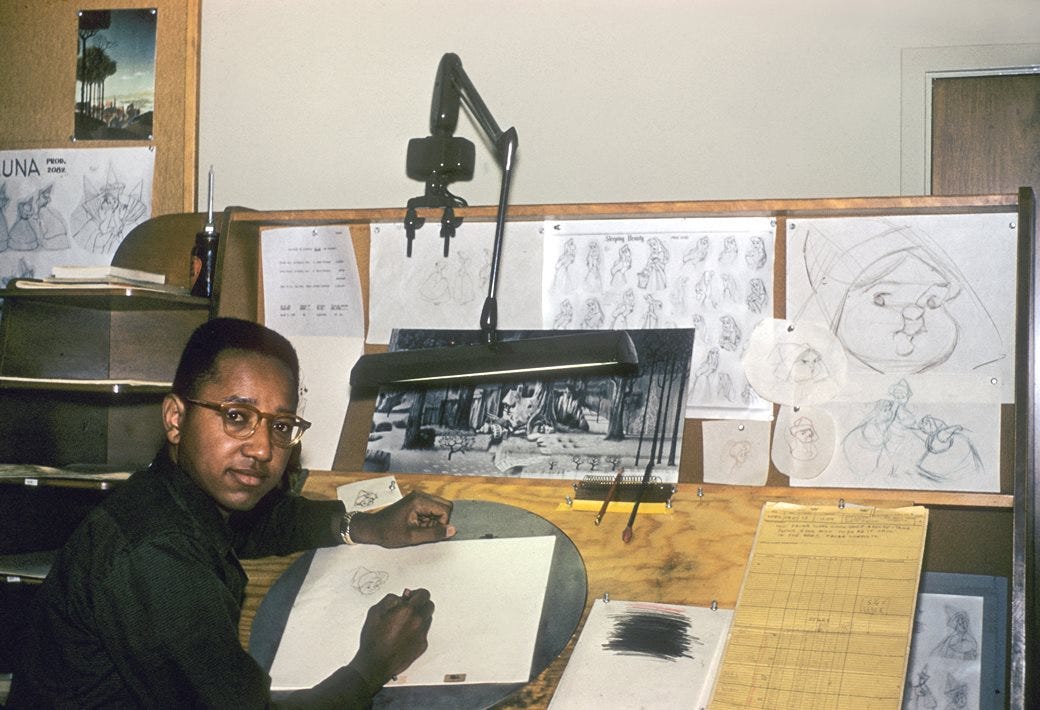
Floyd Norman wanted to be a Disney animator. In high school he’d apprenticed under a well-known cartoonist, but that wasn’t enough for Disney. They turned him down and told him to practice more. At 21, he got his first break, working on Sleeping Beauty, in the lowest artistic rank in the studio.
But then, in 1960, he was drafted into the military. When he came back, he worked on 101 Dalmations and Sword in the Stone. After Walt Disney saw and liked some of his gag drawings he drew on the side, Walt moved him to be part of the story department for Jungle Book.
Ultimately, Norman was the first Black artist Disney hired long-term. After Walt passed away, he was in and out of Disney. At first, pursuing his own studio work and then working on The Smurfs for Hanna-Barbara. Before returning to Disney for the latter half of his career. Ultimately he helped with many of the classics we all love: Robin Hood, Mulan, Toy Story 2, Monsters Inc.
When he turned 65, Disney tried to make him retire. “For some time, I walked the streets of my hometown of Pasadena grumbling and feeling rejected. Then, I realized I can’t continue like this and must make a new start.”
So he decided it wasn’t time to hang it up. He kept coming to the studio anyway. “I found an empty office and I moved in. I was probably in violation of some rule or law or whatever, but there I was.” He just kept showing up. “I would have worked here for nothing.”
It became known as “Floydering.”
As he later recalled, “You see, creative people don’t hang it up. We don’t walk away, we don’t want to sit in a lawn chair.”
Sure, it was a job he did. But Norman saw it as more than that. It’s a craft. A never-ending pursuit where you are tinkering and exploring how to do something a little bit better. And passing that knowledge down along the way. A lifelong journey of learning.
“Yeah, I’m old -- but I still consider myself an apprentice.”
Economist David Galenson spent years studying when great artists do their best work. He found two kinds of careers. “Conceptual” innovators know exactly what they want and make their leap early. “Experimental” innovators tinker, test, and inch forward. Or we could think of it as Picasso painting his most valuable painting at 26, while Cézanne’s came at 67. In other words, the always being an apprentice allows you to peak later.
It’s not just in your craft that this matters. Norman gives us a secret to actual longevity.When researchers tracked nearly 7,000 over 50 year olds, they found that the ones weakest in a sense of purpose were 2.4 times as likely to die when the researchers followed up years later. While when psychologist studied those who were forced to retire and those who chose their own time, the ones pushed out saw a lasting drop in life satisfaction.
Norman got let go. He had to pivot. It wasn’t all smooth sailing. But ultimately, he chose to continue pursuing his craft in his own way.
In 2007, he became a Disney Legend. And on Sunday, the Academy gave him an honorary Oscar. He spent those years doing what he’d always loved:
“There’s no better job than creating something that entertains people. It’s putting a little light into a dark world.”
—
Two legends. Both showing us the way to not only greatness, but the sustainable kind. Fall in love with the craft. Be an apprentice. Go on the journey to learn, about the pursuit and yourself.
It’s not some secret. It’s not some 14-step protocol. The real key to longevity in craft and life, might be much simpler but harder: love.
-Steve Magness
P.S. I write deep dives on performance and chasing excellence. All of them free. Consider sharing or subscribing. It helps a lot!
Thanks for reading. My goal is to make this the best place on the planet for performance and chasing excellence. I’ll cover the mental and physical side, as well as in sport, business, and life.
Instagram: Steve Magness
Substack: Steve Magness
Twitter/X: @Stevemagness
YouTube: Steve Magness
Facebook: Steve Magness
Jágr's line about skating alone to get a free mind fits Robert Vallerand's split between harmonious and obsessive passion. Both types put in long hours. In his studies, obsessive passion, where self-worth depends on the activity, went with rigid persistence and burnout, while harmonious passion went with lasting engagement and better wellbeing. The love that lasts decades may be the kind you can still step away from.
I wish someone had told me "fun is the best performance enhancer" in my sales career. I watched so many top performers burn out. They didn't stop working hard. The work stopped feeling like theirs. Once everything is about the number, your body treats the job as a threat instead of a craft. A body under threat can sprint, but it can't last. Jagr skating with "a free mind" is the whole thing. Joy isn't the reward for performance. It's what keeps it going.