

“I see so many kids that are so anxious to do the wrong thing because the coach or the parent is yelling at them throughout the game that it drives me crazy.”
That’s Landon Donovan, arguably the greatest American men’s soccer player ever, describing exactly how we create fear of failure. And another legend and science backs him up.
The late Kobe Bryant once pulled a parent aside at his daughter’s basketball practice who was yelling from the sideline, and told them,“Don’t say anything. There’s a conversation happening inside her head. She’s pumping herself up. An outside voice interrupts her process. Let her figure it out herself.”
We look to others to understand how we’re performing and what’s important. You don’t need research to tell you this, you just need to be a parent. When your child was a toddler, they tried to build a block tower or take apart something, and when they succeeded or struggled, they’d inevitably turn to mom or dad for encouragement or approval. Give a smile, a clap, or what have you and your child tries again and again. Look angry or frustrated and the kid throws in the towel. Research tells us that toddlers often switch their emotion to match their parent, and will decide to persist or quit based on mom’s facial expression.
We still do the same thing as kids and even through our teenage years, for both parents and coaches. Adults send signals. They tell us whether it’s worth it or not to persist, and more so what they value in watching us perform. If we’re always screaming on the sideline or on the flip side giving the cold shoulder after a mistake, then it sends a clear message that my support is contingent on how well you perform.
That takes our attention away from the game, and pushes it toward thinking about the reaction we might get from mom, dad, or coach if we mess up. We’re learning to seek approval, and fear messing up. Every touch becomes a test with an audience. You’re literally training them not to be present and focused, but to worry about the reaction.
And that’s exactly what leads to fear of failure, choking, and under performance.
We wonder why kids play tight. We’re standing right there, teaching them to.
Away from the sporting fields, psychologist Andrew Elliot tracked fear of failure across generations and found it passes from parent to child. He coined the mechanism as love withdrawal. When a kid senses that mistakes cost them warmth, approval, or attention, failure transforms into a threat to the relationship. The yelling gets interpreted as a signal about what your love depends on.
While love withdrawal might seem dramatic, research in sports backs it up. We tend to use the phrase “parental conditional regard, when affection is given or withheld based on performance. In studying youth sports, one of the largest drivers of fear of failure is parents and coaches. When researchers dug into why they identified the three parental practices that build fear of failure: punitive behavior, controlling behavior, and high expectations. In other research, when kids perceive parents as valuing winning over learning, fear of failure rises.
Kobe Bryant saw the same thing. His dad told him: “Whether you score 0 or 60, I love you.” Kobe said that it gave him“the confidence to say, ‘Okay, it’s okay to fail because you’re going to be loved no matter what.’... I’ve seen too many parents do the exact opposite and it terrifies children. Children become paralyzed by their own fear because they don’t have that security blanket of love and comfort.”
Too often, we think that if we’re a hard-ass on our kids it’ll build competitiveness or toughness. It’s a common trope, but research backs up Bryant. We need a baseline of love and support to play free.
Care + Expectations Beats Authoritarean
In the 1960s, developmental psychologist Diana Baumrind pioneered how we understand parenting. Through research and observation, she discovered that parenting styles can be classified based on two factors: responsiveness and demandingness. If a parent was low in demandingness and high in responsiveness, they were too soft, a permissive parent who would let their child get away with just about anything. If a parent was high in demandingness and low in responsiveness, they were too hard, an authoritarian who relied on harsh discipline, with little attention to the child's needs.
Across research, the hard-ass authoritarean style failed. It led to more behavior problems, lower rates of resilience and persistence. It even failed in the one place you might expect it to pan out, when kids went into military service. And it makes sense, we all knew the over-controlling parent who gave no autonomy. Their kid was often the one who figured out how to sneak out and break the rules. They rebelled.
The magic came in the middle, with high support and expectations. That’s what Baumrind found in parenting and what other researchers found in sport. We need standards but also support. Or as self-determination theory tells us, we’re most motivated when we have autonomy, competency, and belonging.
That’s what is missing when we have a a parent losing it on the sidelines based on performance. Parents mistake it for tough love. When in reality it just creates fragility. Great performance is built on having a stable support group that allows you to fail and not internalize it. That support is precisely what allows for good and sometimes tough coaching.
As a lifelong coach, it’s the genuine care and respect that allows you to drill down into how to get better because it doesn’t activate a threat response whenever any constructive criticism arises.
Creating Space to Perform
Landon Donovan experienced the impact of the pressure and expectations first hand. He showed up at the 2006 World Cup as the face of American soccer after a brilliant run at the previous edition: “It was the only time in my career where I played tentatively, hesitant, not aggressive. I was a little bit in my own head and sort of more worried about the outcome instead of just performing at a high level.”
We’re all susceptible, even the best. But if you’ve ingrained that pattern from a young age, it becomes harder and harder to kick it.
Donovan went on, “I was so wrapped up in my identity as a soccer player that I had to succeed. And when I didn’t succeed, my whole world fell apart.”
When failure attacks your identity, it’s hard to perform in just about anything. Like so many other stars, he had to get help to understand “that they weren’t so tied together that failure would destroy me.” So many legends have had to learn the same thing, like Bill Russell who said about basketball, “That’s what I do, that’s not what I am.”
It’s simple to say, but hard to do. But if your a kid who has parents who make it clear that their love is dependent on performance, what do you think you learn to do? Your sport becomes your identity.
Let Them Learn and Fail
Failure is our greatest teacher. But we can either ingrain a mindset that allows us to handle it and grow from it. Or one that makes us scared of it. It always stings, but the difference is whether it becomes temporary pain or a scar that just won’t go away.
Sport is about learning this complicated dance. It’s about taking risks, seeing what we’re capable of, making mistakes…all in an environment where consequences are in the grand scheme of things temporary and mild. It’s not life or death.
If we allow kids to experience this wonderful arena, they learn a lot. Which is the point Kobe was making. Put them in the arena, but don’t get in their way. When kids never get to assess risk on their own, never get to feel the small triumph of doing something hard alone, the brain learns one lesson: everything is risky.
We default to protection or “why try” mode when the pressure is on and we’re thinking about what the sideline might say.
So there you have it, two great competitors in two different sports, arrived at the same instruction for parents:
Kobe: “Don’t say anything. Let her figure it out herself.”
Donovan: “Just shut up on the sideline and let their kid play.”
And the research backs them up.
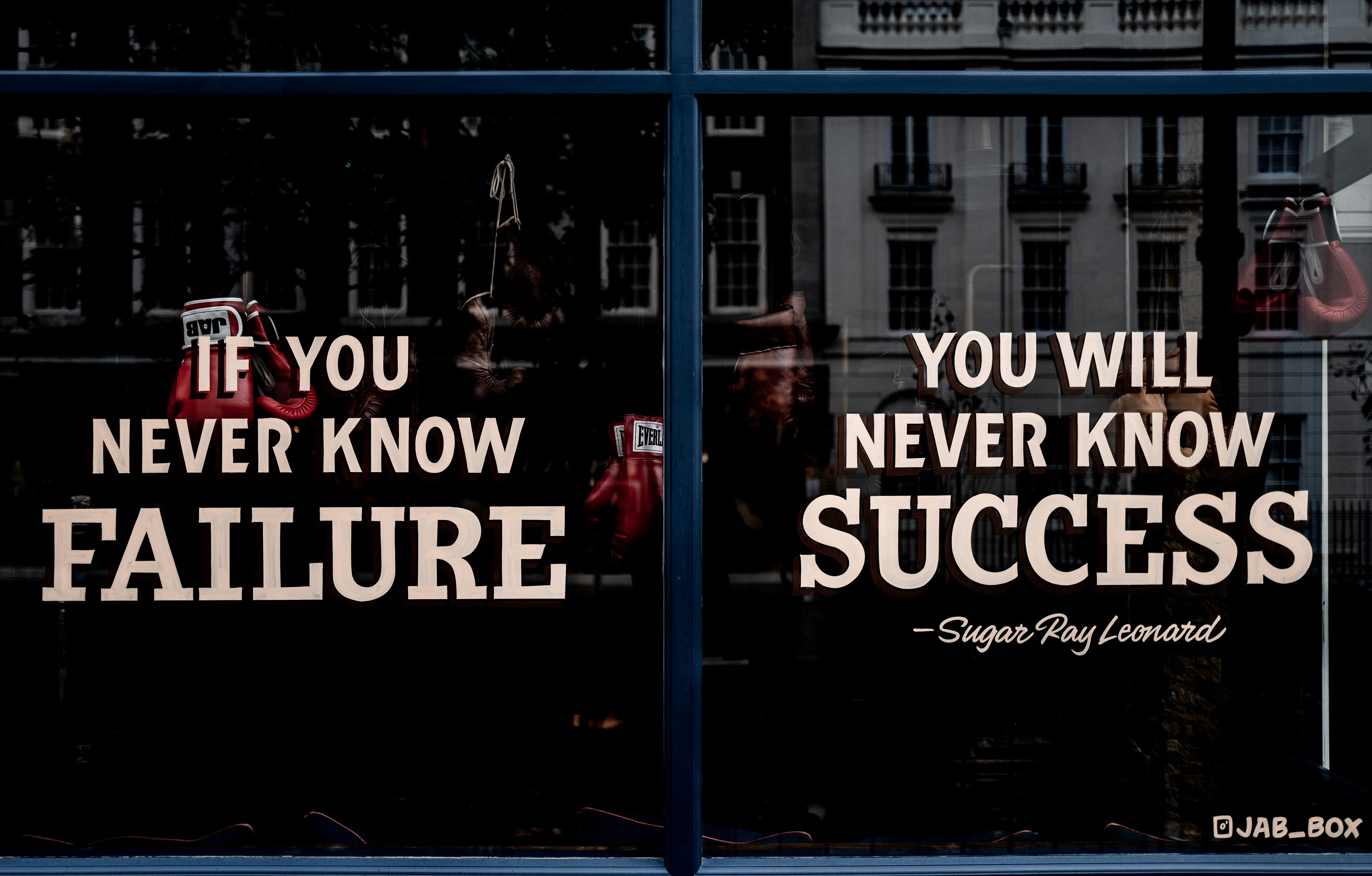
The sideline is the first arena where kids learn what mistakes cost. Do you want love and identity to be on the line? If so, you’re building fragility. Or do you give them the space to figure it out?
Sometimes, silence is the best gift.
-Steve
Also, as a youth coach, sometimes the parent's "coaching" is contradicting the coach. We might be running a possession play when a parent is encouraging their kid to go to goal. And it creates additional unnecessary conflict for the player.
The same has unfortunately happened with academics as well, especially in lots of Asian families. They put so much pressure on the kid to get As, and then punish them if they don't, either by taking actual privileges away or just treating them coldly and rudely. A lot of us learned young that love was contingent on our exam results. Because of this, it took me until my 20s to realize I never hated school or learning, I just hated the fear of failure for taking the joy of learning away from me.